Top 10 Liquid Packaging Solutions You Should Know About?
Liquid packaging is an essential aspect of modern industry. It ensures products remain safe and fresh during transport and storage. With various options available, finding the right solution can be challenging. The growing demand for convenience drives innovation in liquid packaging.
Every packaging type serves a unique purpose. Some are ideal for liquids like juice or sauces. Others cater to beverages such as water or energy drinks. Understanding these specific needs is crucial for businesses.
However, the right choice is not always obvious. Many companies still struggle with outdated solutions. This can lead to issues like spoilage or leaks. It's essential to reflect on current practices and consider modern alternatives. The world of liquid packaging continues to evolve, and staying informed is vital for success.
Understanding Liquid Packaging: An Overview
Liquid packaging plays a crucial role in various industries, from beverages to pharmaceuticals. The global liquid packaging market was valued at approximately $440 billion in 2020, with a projected growth rate of around 5.2% through 2027. This data shows a rising trend in the demand for effective and innovative packaging solutions. The materials used in liquid packaging vary widely, including glass, plastic, and metal, each presenting unique advantages and challenges.
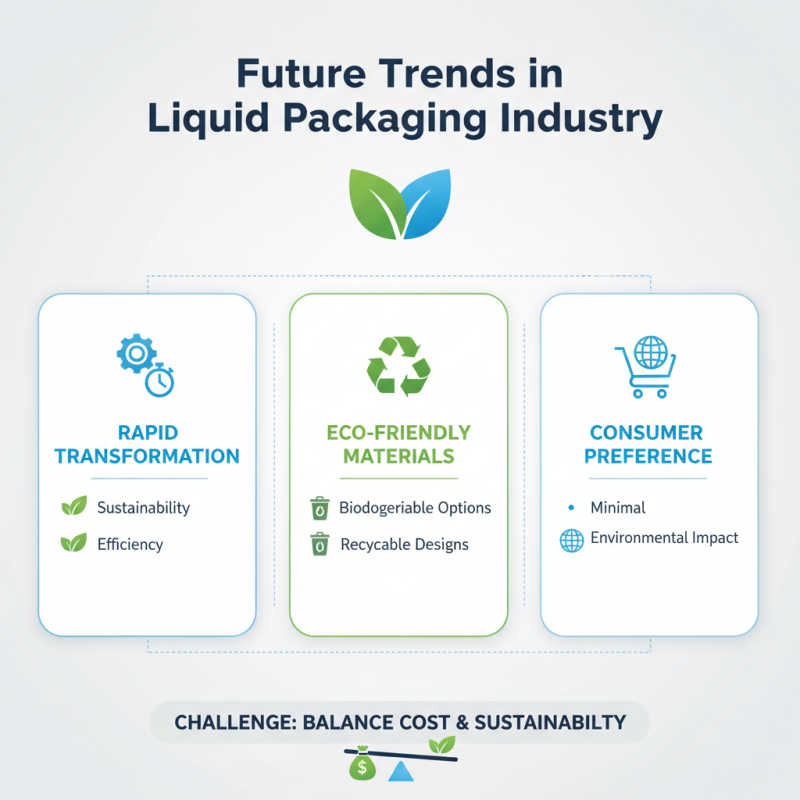
Understanding the nuances of liquid packaging is essential. For instance, while plastic is lightweight and cost-effective, concerns about sustainability and recyclability persist. A study has found that nearly 70% of consumers prefer products with eco-friendly packaging. Glass, on the other hand, is perceived as more premium but can break easily. There's also the rising trend of biodegradable options, which attempts to address environmental concerns. The industry must constantly adapt to evolving consumer preferences.
While advancements are impactful, flaws exist. Many liquid packaging methods still face issues with leaching substances and maintaining product integrity. Innovations like vacuum packaging show promise but require more research. The way forward must involve balancing functionality, safety, and sustainability, yet many solutions still fall short, demanding further reflection and development.
Key Factors to Consider in Liquid Packaging Solutions
Liquid packaging solutions are critical in many industries. When considering options, several factors come into play. A report from Grand View Research states that the global liquid packaging market is expected to reach $400 billion by 2025. This growth emphasizes the importance of selecting the right packaging.
One key factor is the material used in packaging. Options like glass, plastic, and metal each have unique properties. Glass offers superior preservation of liquids but can be heavy and fragile. Plastic is lightweight and versatile. However, it might not be as environmentally friendly. The choice of material affects not only cost but also sustainability. According to a study by Nielsen, 66% of consumers are willing to pay more for sustainable brands.
Another consideration is the packaging design. Effective designs can enhance user convenience. Easy-to-pour spouts or resealable features contribute to a better user experience. However, overly complex designs could lead to increased waste. The balance between functionality and aesthetics can be challenging. Many businesses struggle with it. Research indicates that 26% of packaging fails to meet consumer expectations. Continuous improvement is essential in this evolving landscape.
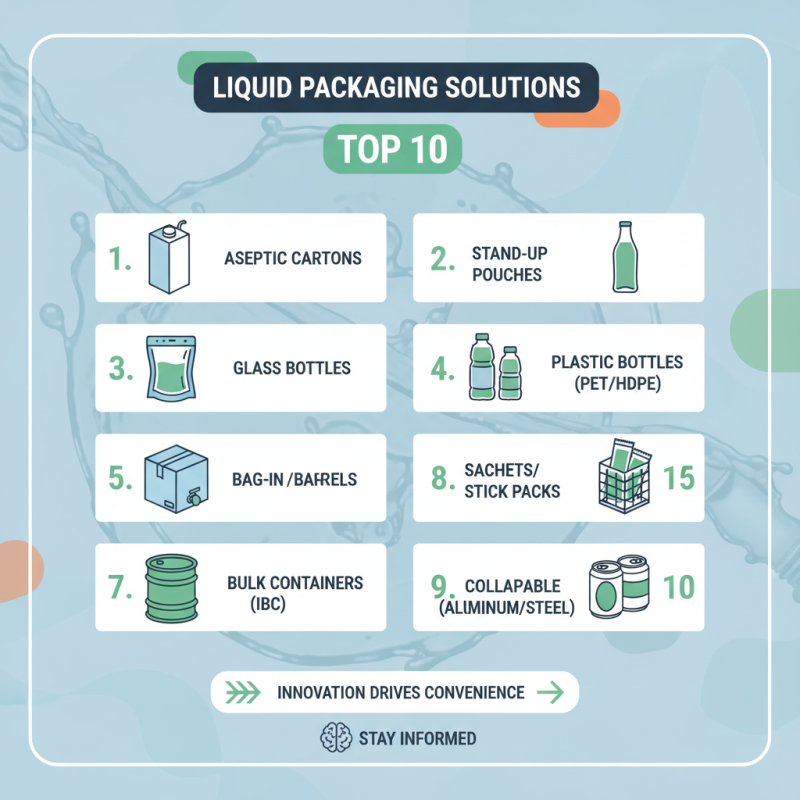
Top 10 Liquid Packaging Solutions You Should Know About
| Packaging Type |
Material |
Capacity (Liters) |
Key Features |
Sustainability |
| Flexible Pouches |
Plastic |
0.5 - 5 |
Lightweight, cost-effective, resealable |
Recyclable options available |
| Glass Bottles |
Glass |
0.25 - 2 |
Reusable, non-reactive |
Fully recyclable |
| Cartons |
Cardboard, Plastic |
1 - 25 |
Stackable, recyclable, good for shelf-life |
Made from renewable resources |
| Cans |
Aluminum, Tin |
0.33 - 5 |
Durable, portable, light-proof |
Highly recyclable |
| Bag-in-Box |
Plastic, Cardboard |
1 - 20 |
Easy dispensing, minimizes waste |
Box made from recyclable materials |
| Tetra Pak |
Cardboard, Plastic, Aluminum |
0.2 - 1 |
Long shelf-life, lightweight |
Recyclable, renewable materials |
| Shrink Sleeves |
Plastic |
0.25 - 10 |
Full-wrap designs, tamper-evident |
Limited recyclability |
| Squeeze Bottles |
Plastic |
0.25 - 2 |
Easy to use, minimizes spillage |
Recyclable options available |
| Medical Vials |
Glass, Plastic |
0.01 - 1 |
Sterile, precise dosage |
Recyclable depending on materials |
Sustainable Practices in Liquid Packaging Solutions
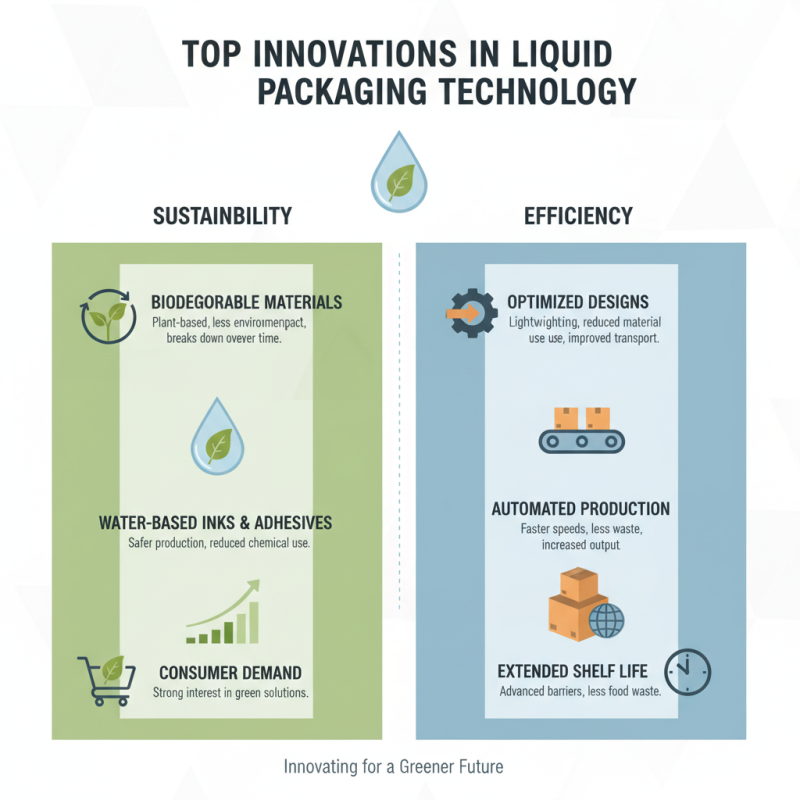
Liquid packaging plays a crucial role in preserving beverages. However, the environmental impact is significant. Traditional materials contribute to pollution and waste. Sustainable practices are essential in addressing these challenges.
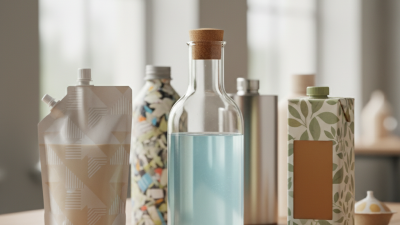
Innovative materials are emerging in the liquid packaging industry. For instance, biodegradable films and plant-based plastics are gaining traction. These alternatives break down more quickly than conventional plastics. They reduce landfill waste, which is a significant concern today. Additionally, reusable containers encourage a circular economy.
Yet, there are challenges. Not all sustainable options are economically viable. Some consumers may prioritize convenience over eco-friendliness. Additionally, the efficiency of these alternatives needs further evaluation. Packing solutions must not only be sustainable but also effective in keeping drinks fresh and safe. The journey toward fully sustainable liquid packaging is ongoing, with many lessons still to learn.