How to Choose the Right Box Material for Your Packaging Needs?
Selecting the right box material for your packaging needs is crucial. The choice of box material impacts both product safety and brand perception. Different materials offer varying levels of durability and protection.
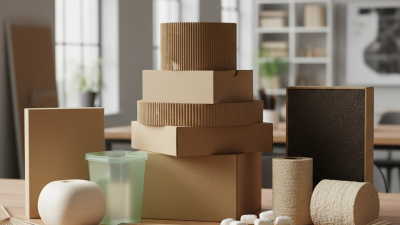
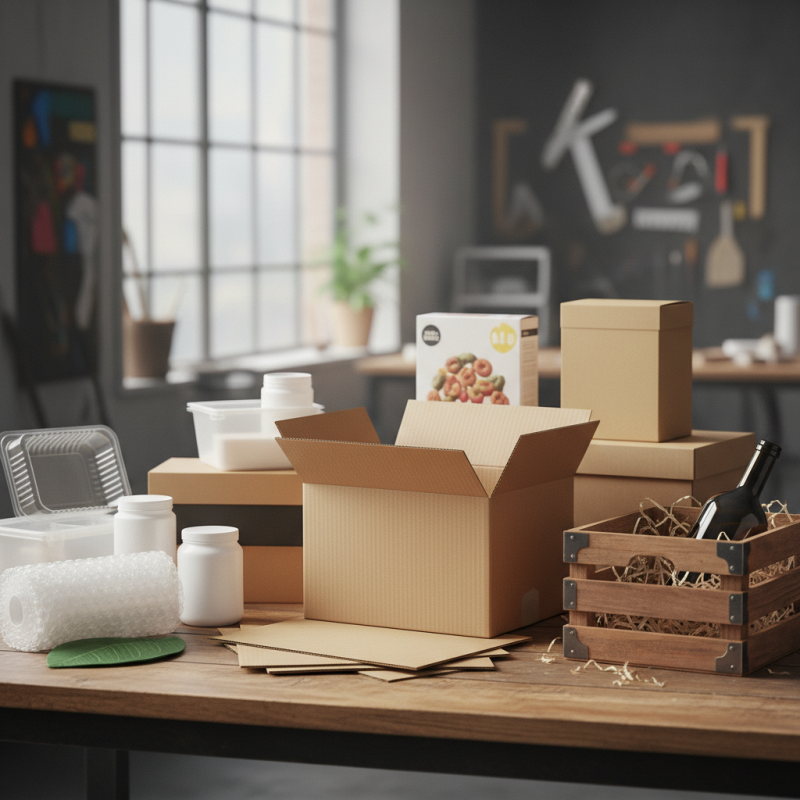
Cardboard is widely used for its lightweight nature and cost-effectiveness. It’s ideal for many retail products. However, cardboard may not withstand heavy items or rough handling well. On the other hand, wooden boxes provide excellent durability and a premium feel. This can enhance product presentation but often comes at a higher cost.
Plastic materials also offer versatility and moisture resistance. However, the environmental impact of plastic cannot be overlooked. Factors like shipping distance, product type, and intended audience should guide your decision. Each box material has pros and cons, requiring a careful evaluation. The wrong choice could lead to damaged goods or dissatisfied customers. Reflecting on these choices is essential to find the best fit for your needs.
Factors to Consider When Selecting Box Materials for Packaging
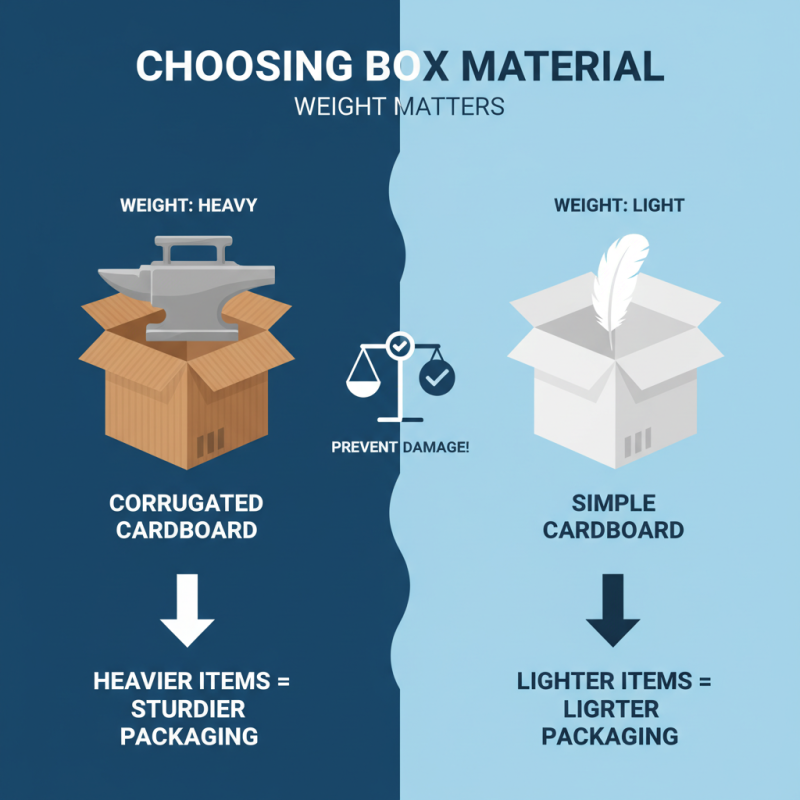
Choosing the right box material for your packaging needs involves several critical factors. One major consideration is the weight of the item being packaged. Heavier items require sturdier materials, such as corrugated boxes. For lighter products, a simple cardboard option might suffice. Weighing the contents accurately can prevent damage in transit.
Another essential aspect is the environmental impact of the material. Many consumers prefer sustainable options. Recycled materials can serve both functional and eco-friendly purposes. However, not all recycled materials provide equal protection. Testing different options can lead to unexpected outcomes. The style and branding of your packaging also play a role. A more luxurious appearance might demand premium materials, increasing costs. Sometimes, businesses overlook the balance between cost and quality.
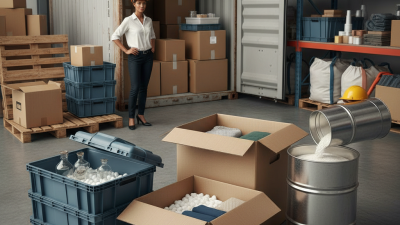
Durability is crucial. Moisture-resistant materials are necessary if the product is sensitive to water. Likewise, the closure method must align with the material's strength. A weak seal can lead to issues, impacting overall performance. Reflecting on these factors can reveal gaps in your current packaging strategy. It’s essential to evaluate past choices and adapt accordingly.
Types of Box Materials Available for Different Packaging Needs
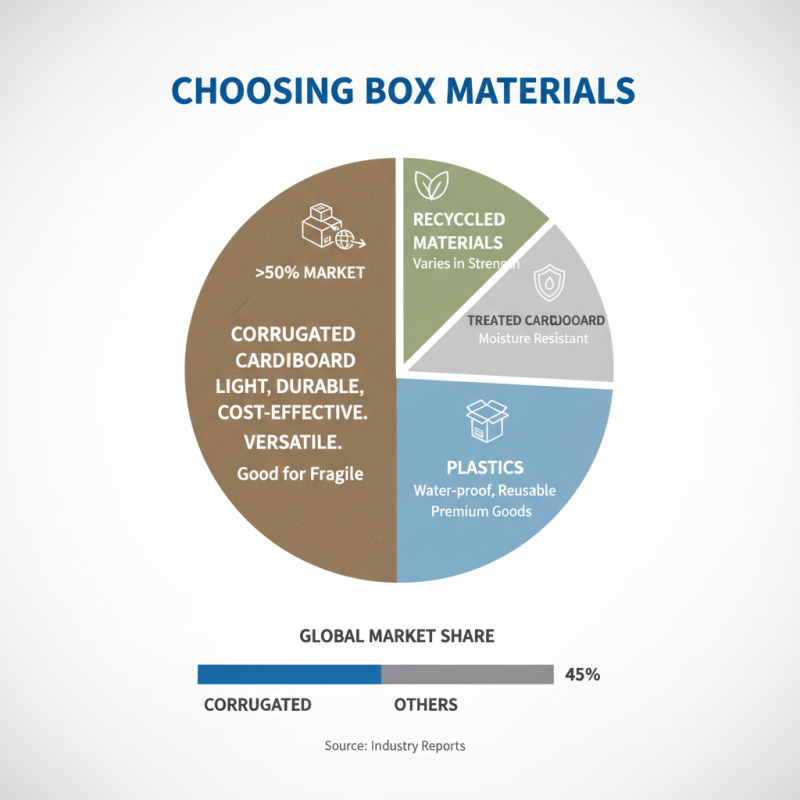
Choosing the right box material can significantly impact your packaging effectiveness. Various materials have unique properties that cater to different needs. For example, corrugated cardboard is often favored for its lightweight and durable nature. According to industry reports, it represents over 50% of the global box market due to its cost-effectiveness and versatility. It’s suitable for shipping fragile items, but may not withstand extreme moisture unless treated.
Another popular option is rigid boxes. These provide sturdiness and a high-end presentation, making them perfect for luxury products. However, their higher costs can be a barrier for some businesses. A report indicates that rigid boxes account for about 20% of the total packaging market share. They often serve as eye-catching displays, yet their use should be weighed against the budget constraints of the packaging strategy.
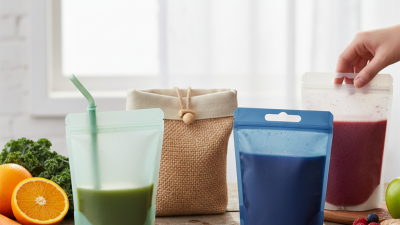
Plastic boxes are also available. They are waterproof and extremely durable. However, they may pose environmental challenges. A significant percentage of consumers prefer sustainable packaging. While plastic boxes can protect items well, the growing demand for eco-friendly options makes it essential to reflect on your packaging choices carefully. Balancing functionality with sustainability remains a complex challenge for many businesses today.
Evaluating the Strength and Durability of Box Materials
When selecting packaging, strength and durability are crucial. The right box material protects contents during transport. Various options are available, each with unique properties. For fragile items, materials like double-walled corrugated cardboard offer extra support. They resist crushing and can handle weight better than single-walled options. However, they are heavier and may increase shipping costs.
For lighter items, consider paperboard. It's less robust but offers sufficient protection for many products. Yet, it may not stand up to rough handling or extreme conditions. If the packaging will be stored outdoors, moisture-resistant materials are essential. Plastic or treated cardboard could be viable choices, but they may have environmental impacts. This requires a careful balance between performance and ecological considerations.
Testing the chosen material is essential. Simply assuming that a certain material is suitable can lead to issues. Conduct drop tests and evaluate how the box withstands stress over time. Often, unforeseen weaknesses arise only during real-world use. Thus, considering these factors will lead to better choices in box materials.
Sustainability Considerations in Box Material Selection
Choosing sustainable box materials is becoming increasingly crucial in packaging decisions. According to a recent report from the Sustainable Packaging Coalition, over 70% of consumers prefer eco-friendly packaging. This shift is reshaping industry standards and practices. Many companies are now tasked with sourcing materials that not only protect their products but also minimize environmental impact.
Recycled cardboard is a popular option in sustainable packaging. It provides strength without sacrificing eco-friendliness. Paper-based materials can decompose within 2-6 months in natural conditions. In contrast, plastic can take up to 1,000 years to break down. However, it's essential to address the challenges. Sourcing recycled materials can lead to inconsistencies in quality and performance. Brands must balance sustainability with reliability.
Another emerging trend is biodegradable plastics. These materials break down more quickly than traditional plastics. They can offer a viable alternative for companies aiming to reduce their carbon footprint. Nevertheless, the production processes for these materials can still have adverse effects. Reportedly, some biodegradable plastics release harmful emissions during production. Businesses need to reflect on these trade-offs when selecting materials for their packaging needs.
Cost-Effectiveness of Various Box Material Options for Packaging
When selecting packaging, the choice of box material greatly affects costs. Materials vary significantly, impacting total expenditures. A recent report from Smithers Pira states that packaging accounts for about 10% of total product costs. This highlights the importance of material selection.
Corrugated cardboard is a popular option. It is lightweight and affordable, with prices averaging around $0.50 to $3.00 per box, depending on size. However, it lacks moisture resistance. This can lead to damaged products. In contrast, plastic boxes can cost up to $5.00 each. They are durable but may not always be cost-effective for bulk orders.
Recycled materials have gained popularity. They offer sustainability and can reduce costs. A study by Freedonia Group indicates that demand for recycled packaging materials is increasing at a rate of 4.5% annually. However, these materials might not meet all strength requirements. Choosing the right box material involves balancing cost, durability, and environmental impact. It is not straightforward, and companies must continually reassess their options.