How to Choose the Right Liquid Packaging for Your Product Needs?
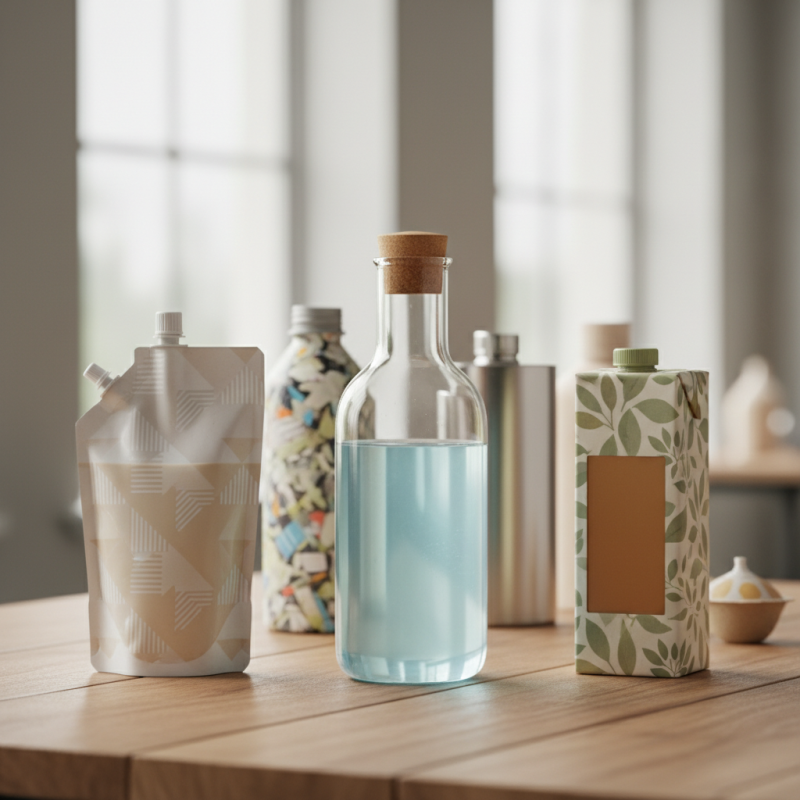
Choosing the right liquid packaging can be challenging. Understanding your product's needs is crucial. According to industry expert Sarah Thompson, "The right packaging can enhance both safety and brand appeal." Liquid packaging solutions vary widely. They include bottles, pouches, and cartons. Each option has its own benefits and drawbacks.
Consider the environmental impact of your choice. Sustainable options are gaining popularity, but they may come with limitations. Additionally, the packaging must comply with regulations. Failing to do so can lead to costly mistakes.
Remember that aesthetic factors matter as well. Attractive packaging can draw in customers. However, it shouldn't compromise functionality. Finding a balance is essential. Reflect on your brand identity and consumer preferences. This insight will guide you in selecting the perfect liquid packaging for your needs.
Understanding the Importance of Liquid Packaging for Products
Liquid packaging plays a crucial role in the product lifecycle. It protects your product from contamination and external elements. According to a recent industry report, over 80% of consumers consider packaging when making purchasing decisions. This highlights its importance in shaping customer perceptions.
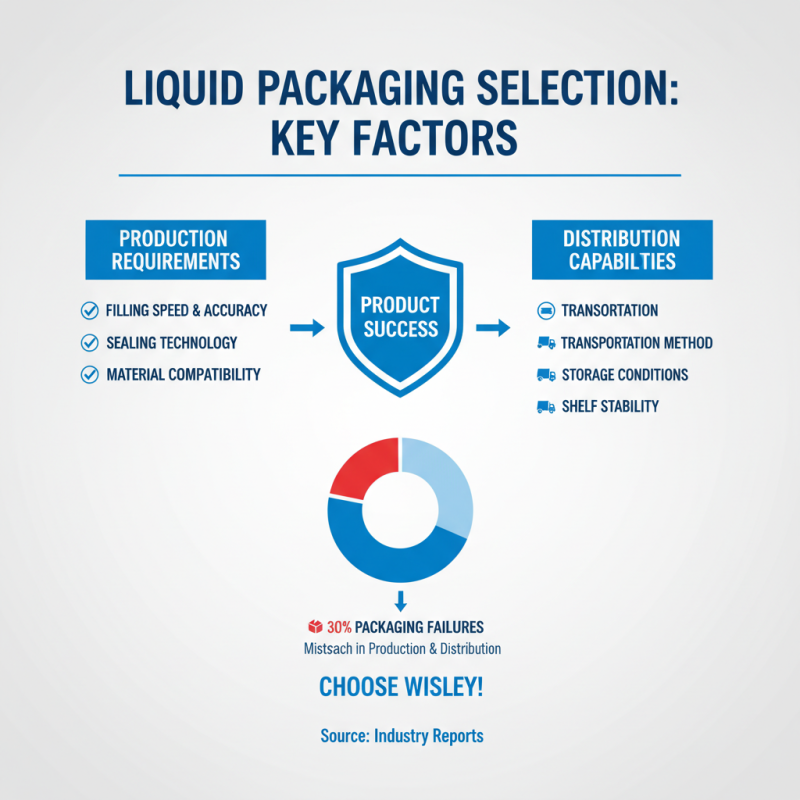
The right liquid packaging also impacts shelf life. For example, a study by Packaging Strategies found that innovative materials can extend freshness by up to 50%. However, many businesses still overlook packaging's role in brand identity. They often prioritize cost over quality. This can lead to issues like leakage or spoilage, which ultimately affect customer satisfaction.
Furthermore, sustainable packaging choices are becoming vital. Reports state that 60% of consumers are willing to pay more for eco-friendly options. Yet, a large number of companies still rely on traditional materials. This disconnect can harm brand reputation. As consumer awareness grows, brands must rethink their liquid packaging strategies to meet evolving needs. Balancing cost, design, and sustainability requires reflection and adaptation.
Identifying Different Types of Liquid Packaging Solutions
Liquid packaging is essential for various industries. Choosing the right type can impact shelf life and consumer perception. There are several solutions available, each with distinct characteristics.
Flexitanks are popular for bulk liquids. They can hold up to 24,000 liters. According to a report by Smithers Pira, they reduce transportation costs significantly, yet they can be prone to leaks if not handled properly. Rigid containers, such as bottles or jars, offer durability and brand visibility. However, they may contribute to higher production costs.
Another option is flexible pouches. With a growth rate projected at 5.5% annually, they are lightweight and space-efficient. Yet, they may not provide the same level of protection against external factors. Understanding these differences can help in making informed decisions. Each option has its pros and cons. It's crucial to consider product stability, cost, and market trends.
Evaluating Material Options for Liquid Packaging
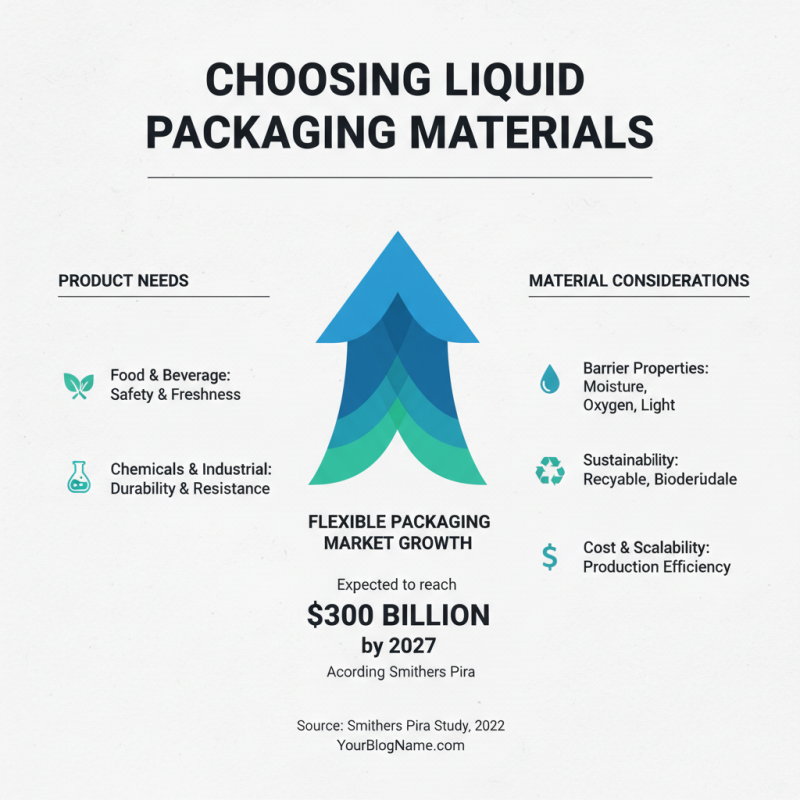
Choosing the right liquid packaging material can be challenging. Different products have unique needs. For instance, food and beverage items require materials that ensure safety and maintain freshness. According to a recent study by Smithers Pira, the flexible packaging market is expected to reach $300 billion by 2027, highlighting a significant shift in consumer preferences.
When evaluating material options, consider durability and environmental impact. Plastic offers excellent barrier properties but poses recycling challenges. On the other hand, glass is recyclable and non-reactive but can be heavier and more fragile. Interestingly, a 2021 report from the Sustainable Packaging Coalition revealed that 74% of consumers are willing to pay more for sustainable packaging. This data emphasizes the growing demand for eco-friendly options.
Innovative solutions are emerging. Plant-based packaging materials are gaining traction. They provide biodegradable alternatives that may meet both environmental and performance standards. Yet, the high production costs could hinder widespread adoption. Companies must weigh these factors carefully. Balancing cost with sustainability is not a straightforward task.
Making Sustainable Choices in Liquid Packaging Design
Sustainable liquid packaging is becoming essential. Recent studies show that over 70% of consumers prefer eco-friendly options. Choosing the right materials can significantly reduce environmental impact. For instance, biodegradable plastics or plant-based materials can minimize harm to our planet.
Many companies are exploring innovative designs. Research indicates that packaging accounts for nearly 30% of total product lifecycle emissions. Simple changes, like using lighter materials, can lower carbon footprints. Additionally, refillable systems encourage reuse, cutting down single-use waste.
However, not all sustainable choices are perfect. Some biodegradable materials may still end up in landfills, where they don’t decompose effectively. Manufacturers need to consider end-of-life options for their packaging. It's a complex issue, requiring careful thought and planning to truly achieve sustainability.