How to Choose Aluminium Bags at the 139th Canton Fair?
The 139th Canton Fair is a vital event for businesses seeking innovative products. Among these, Aluminium Bags stand out due to their versatility and durability. When choosing Aluminium Bags, it is essential to consider various factors, such as material quality and design options. Potential buyers should pay close attention to certifications like ISO or CE, ensuring the products meet industry standards.
Navigating the vast exhibition space can be daunting. The introduction of AI search and smart navigation at the Canton Fair helps buyers efficiently locate suppliers. However, with over 1.55 million square meters of exhibition area, some might still find it challenging to identify the best options.
It is important to take time and reflect on specific needs when selecting Aluminium Bags. While one may focus on price, quality should not be compromised. Consider the bag’s intended use; will it be for shipping, storage, or retail purposes? Understanding these details can lead to better decisions.

Factors to Consider When Choosing Aluminium Bags
When selecting aluminum bags at the 139th Canton Fair, several important factors come into play. One key consideration is the bag's intended use. Aluminum bags are often used for packaging food, electronics, or pharmaceuticals. According to the Packaging Institute, 63% of manufacturers cite protective features as crucial. This data emphasizes the need for durability and barrier properties when choosing bags.
Another factor is the size and shape of the bags. Custom sizes can significantly impact storage efficiency and ease of transport. Reports show that companies can save up to 15% on shipping costs by choosing appropriately sized packaging. Often, visitors overlook this aspect, leading to wasted space and increased expenses.
Lastly, it’s essential to evaluate the supplier's certifications. Regulatory compliance is necessary for many industries, especially food and medical. A 2021 survey found that 70% of buyers prioritize certified suppliers to ensure safety and quality. However, many overlook the nuances of certification types. This can lead to regrettable choices down the line. Therefore, being informed is paramount during the selection process.
Factors to Consider When Choosing Aluminium Bags
Understanding Different Types of Aluminium Bags Available
When attending the 139th Canton Fair, it's crucial to understand the various types of aluminium bags available. Some common types include stand-up pouches, flat pouches, and resealable bags. Stand-up pouches are popular due to their versatility, holding up to 5 kg of products. With a market size of about $1.5 billion in 2022, this segment shows promising growth.
Flat pouches are typically used for single-use items. They can be customized for branding, allowing for a unique appearance. A study indicated that flat pouches make up 35% of the aluminium bags market. However, their limited reusability can impact sustainability efforts. Resealable bags combine convenience and functionality, appealing to consumers who prioritize ease of use.
Choosing the right type involves considering the product's specifications. While aluminium bags are durable, some options may not provide adequate protection against moisture. It's essential to weigh the pros and cons. Research notes that 40% of businesses opt for eco-friendly features, yet many still overlook the importance of sealing technology. Evaluating these factors can significantly affect customer satisfaction.
How to Choose Aluminium Bags at the 139th Canton Fair? - Understanding Different Types of Aluminium Bags Available
| Type of Aluminium Bag |
Size (cm) |
Thickness (micron) |
Closure Type |
Application |
| Stand-Up Pouch |
10 x 15 |
100 |
Zip Lock |
Food Packaging |
| Flat Bag |
20 x 30 |
80 |
Heat Seal |
Electronics |
| Gusseted Bag |
15 x 25 |
120 |
Twist Tie |
Cosmetics |
| Pillow Bag |
12 x 20 |
90 |
Peel Seal |
Snacks |
Evaluating Quality and Durability of Aluminium Bags
When attending the 139th Canton Fair, selecting high-quality aluminum bags is crucial. Evaluating the quality and durability of these bags can save you from future regrets. Look for thick, sturdy materials that resist wear and tear. A bag that feels flimsy likely won’t last. Don’t hesitate to ask vendors about their manufacturing processes. This can reveal a lot about a product's durability.
Tips: Check the seams of the bags. Strong stitching can indicate overall quality. Test the zipper and other closures. Smooth operation is a good sign. If something feels off, take a pause. It’s worth considering if the bag can endure heavy use. Look for bags with a protective lining, as these provide extra security for contents.
When examining weight, remember lighter isn’t always better. Heavier materials can offer greater protection. Reflect on how often you plan to use the bag. Frequent users should prioritize durability. It’s easy to be swayed by flashy designs. However, functionality is key. In the end, investing in quality bags will offer peace of mind.
Assessing Customization Options for Aluminium Bags
When attending the 139th Canton Fair, selecting the right aluminium bags involves careful consideration of customization options. These bags can be tailored in many ways. Size, color, and design are key factors to think about. Think about the purpose of the bags. Will they be used for packaging, promotion, or something else? Each use may require a different design approach.
Customization can make or break your choice. You might want to add logos or slogans. This requires working closely with suppliers. Communication is vital to ensure your vision comes to life. Consider the limitations too. Some suppliers may not offer all colors or sizes. Be prepared to compromise on certain aspects. Sometimes the process can be frustrating. But these challenges can lead to innovative designs.
Pay attention to the materials as well. Not all aluminium is created equal. Look for options that suit your needs best. Think about durability and weight. Will your bags hold up over time? Or will they tear easily? These questions are essential when making a decision. Customization is an exciting journey, but it requires foresight and patience.
Budgeting for Aluminium Bags at the Canton Fair
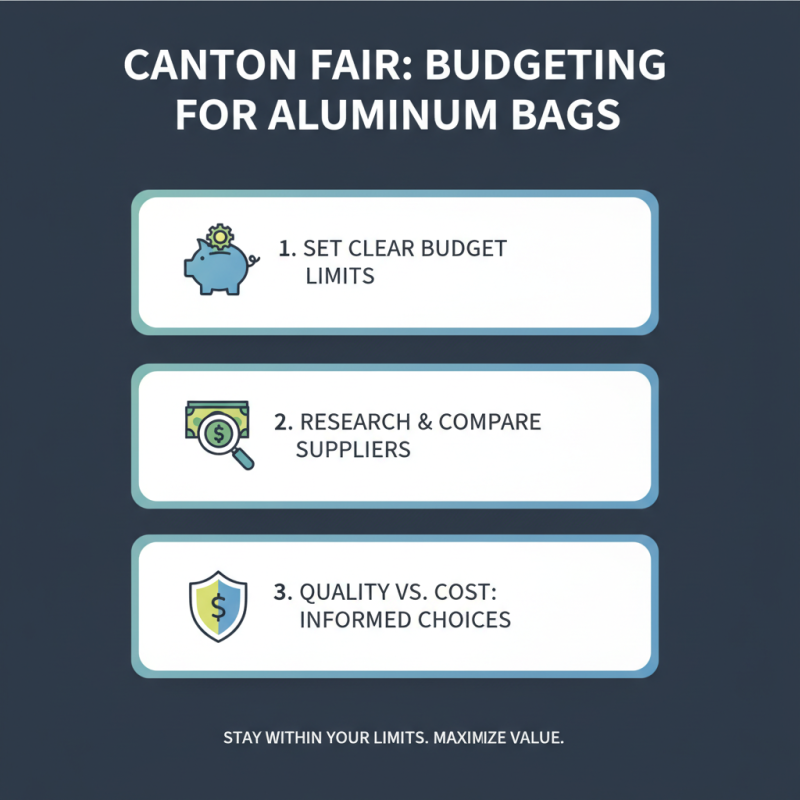
Budgeting for aluminium bags at the Canton Fair can be challenging. It requires careful planning to ensure you get quality products without overspending. Start by setting a clear budget before you arrive. Know your limits. This will help you make informed decisions.
When evaluating prices, consider the material quality and design. Cheaper isn’t always better. You may end up with products that don’t meet your expectations. Don’t rush into purchases just to save money. Take your time. Prices can vary significantly among suppliers.
Tips: Compare prices from different vendors. This provides a clearer picture of the market. Don’t forget to factor in shipping costs and potential import duties. These can add up quickly. Consider the minimum order quantity. Sometimes, larger orders may offer better per-unit pricing. However, be mindful not to overstock.
Always be prepared to negotiate. Vendors may offer discounts for bulk purchases or early payment. It’s worth asking. If a deal sounds too good to be true, it might be. Stay cautious and trust your instincts. Balancing quality and cost is key, and sometimes you may need to rethink your priorities.